
Sepia Saturday 639. Seventh in a series about family history discoveries in the recently released 1950 U.S. census.
When the 1950 US census went public in the spring of 2022, I focused my research on my maternal grandparents, my mom’s sister, Rita, and my parents, with whom I lived in an extended household – and, of course, myself, since I made my census debut that year at the age of 2 months.
However, 1950 was a significant census year for my paternal relatives as well. It was the last census in which my dad’s family of origin was still intact: by 1955 my father’s brother Frederic and my paternal grandmother, Mary Frances “Molly” (Owen) Charboneau, for whom I am named, had both passed.
Uncle Fred and Grandma Charboneau were gone before I could form any memories of them – so finding them one last time with Dad’s entire family in the 1950 US census was a poignant research experience.
Holland Patent then and now
My research journey began in Holland Patent in Town of Trenton, Oneida Co., N.Y., where we used to visit my paternal grandfather, Wm. Ray Charboneau, and Dad’s brother Owen and wife, Aline, during my elementary school years.

I don’t have any Dutch ancestry, but I have long been intrigued by the name of this small hamlet – current population 408. Turns out the village was founded in 1797 by Delft-born settler Gerrit Boon, an agent for the Holland Land Company that privatized and sold usurped Native land from Central to Western New York State in the state’s early years.
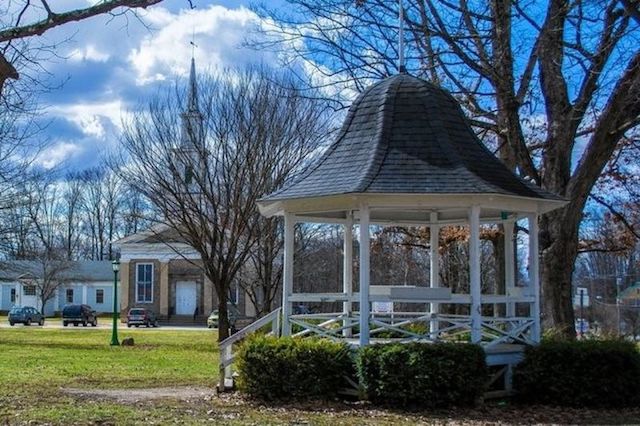
A 2016 online montage by Kathe Harrington titled “A Day in Holland Patent: Photo essay of people, places in Upstate New York village” captures the contemporary scenic beauty of the hamlet and surrounding rural areas. One of her photos shows the stately Presbyterian Church my grandfather attended.
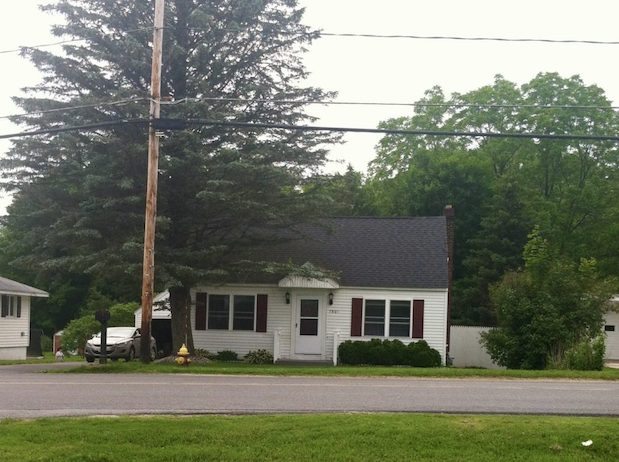
What I remember from childhood visits was playing around the small creek that flowed past the back yard of my grandfather’s house, shown below, at 105 Elm Street (7901 Elm St. today).
There was also a huge school across the street – way bigger than mine in Endwell, N.Y. — and my brothers and I used to play in the schoolyard during visits. The school must have served children beyond Holland Patent proper, because the village is essentially a crossroads where Routes 274, 291 and 365 meet.
Until 1960 the hamlet was also a local stop on the Utica and Black River passenger railroad. The restored station, shown above, is now the Village of Holland Patent Municipal Office.
Upstate migrations
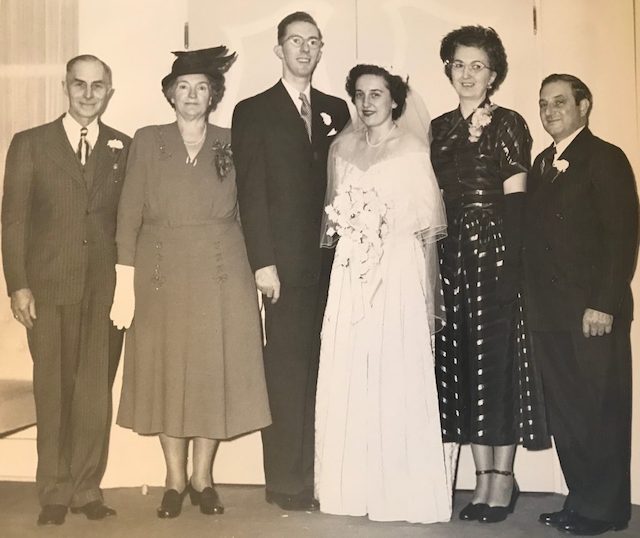
My paternal grandparents moved to Holland Patent in their later years. When the 1950 census was taken my grandfather Ray, born in Forestport, N.Y., was 62 and my grandmother Molly, from Baltimore, Md., was 61. They are shown below at my parents’ wedding about a year and a half before the census.
They arrived at their final home by a circuitous route through upstate New York. Marrying in Dolgeville, they moved to Utica, Whitesboro, and Otter Lake for better job opportunities as they raised their five sons — eventually ending up in Holland Patent.
Each location holds a family story of its own — and details of their migrations will unfold in future posts.
Up next, my paternal grandparents appear in the 1950 US census. Meanwhile, please visit the blogs of this week’s other Sepia Saturday participants.
© 2022 Molly Charboneau. All rights reserved.